
Jackknifes and Rollovers: Why They Happen and How to Stay Clear
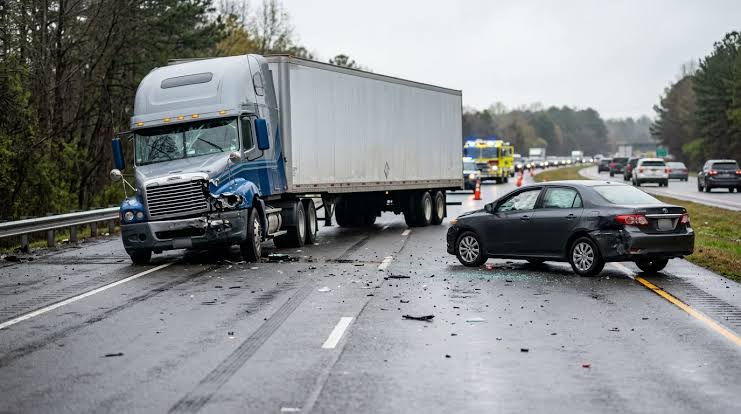
Few sights on the highway are as frightening as a tractor-trailer folding in half or tipping onto its side. Jackknifes and rollovers happen fast, they often block several lanes at once, and the people closest to the truck have very little time to react. Understanding why these crashes happen can help ordinary drivers spot trouble early and give big rigs the room they need.
Content
What a Jackknife Actually Is
A jackknife happens when the trailer swings out and the tractor and trailer form a sharp angle, like a folding pocketknife. Usually the drive wheels of the tractor or the wheels of the trailer lose grip. The trailer keeps moving forward with its own momentum while the cab slows or turns, and the two pieces swing toward each other.
Once a trailer starts to swing, it can sweep across several lanes. Cars beside the truck can be struck by the trailer itself, and vehicles behind it may run into a wall of steel that was not there a second earlier.
What a Rollover Is
A rollover happens when the truck’s center of gravity shifts far enough to one side that the vehicle tips. Tractor-trailers sit high and carry heavy loads, so they are more prone to tipping than passenger cars. A rollover can crush nearby vehicles, spill cargo across the road and start fires if fuel or hazardous materials are involved.
Braking Problems
Hard or uneven braking is one of the most common triggers for a jackknife. If a driver slams the brakes, especially on a slick surface, the wheels can lock. Locked wheels lose steering and traction, and the trailer can slide out of line.
Brake condition matters just as much as brake technique. Brakes that are out of adjustment, worn or poorly maintained can grab unevenly, pulling one side harder than the other. Federal rules require carriers to inspect, repair and maintain their vehicles and keep maintenance records, partly because brake problems on a heavy truck can turn a routine stop into a crash.
Speed on Curves and Ramps
Rollovers often happen on curves, especially highway on-ramps and off-ramps. The posted speed on a ramp is usually set with passenger cars in mind. A tall, heavy truck needs to go slower than that number suggests, because the force pushing it outward in a turn grows quickly with speed.
A driver who enters a curve too fast may feel the trailer begin to lean. By then, it can be too late. Sudden steering corrections can make the problem worse, causing the truck to tip or the trailer to swing.
Cargo That Shifts or Is Loaded Poorly
How a trailer is loaded has a lot to do with how it handles. Cargo that is stacked too high raises the center of gravity. Cargo that is loaded unevenly, heavier on one side, makes a truck more likely to lean in turns. Cargo that is not secured can slide during braking or cornering, and that sudden shift in weight can tip a truck or push a trailer out of line.
Liquid loads bring their own challenge. In a partly filled tanker, the liquid can surge forward, back or sideways, pushing the truck in ways a driver may not expect.
Responsibility for loading can involve more than the driver. Shippers, loading crews and carriers may all have a role, and figuring out who loaded and secured the cargo is often part of understanding a crash.
Empty Trailers and High Winds
It might seem that a lighter truck would be safer. In some ways, the opposite is true. An empty or lightly loaded trailer has less weight pressing its tires to the road, so it has less traction and is easier to push around.
A high-sided empty trailer acts almost like a sail. Strong crosswinds on open highways, bridges and overpasses can shove it sideways or tip it over.
Careful drivers and carriers watch wind forecasts and slow down, change routes or wait out dangerous gusts. When a company pressures a driver to keep moving through severe wind, that decision can carry consequences.
Weather and Road Conditions
Rain, snow, ice and even the first light rain after a dry spell can cut traction sharply. On slick roads, a truck needs more time to slow down and gentler inputs to stay in line.
Road design plays a part too. Sharp curves, poorly marked ramps, sudden lane drops and soft shoulders can all contribute. A driver who drifts onto a soft shoulder and then jerks back toward the road may trigger a rollover.
Fatigue and Distraction
Many jackknifes and rollovers start with a moment of inattention. A tired or distracted driver may notice slowed traffic late and brake too hard, or miss a curve warning sign and enter the bend too fast. Federal Hours of Service rules exist to limit fatigue. For property-carrying drivers, they allow up to 11 hours of driving after 10 consecutive hours off duty, within a 14-hour window, with a 30-minute break after 8 cumulative hours of driving. Electronic logging devices track that time.
How Other Drivers Can Protect Themselves
You cannot control how a truck is loaded or driven, but you can lower your exposure. A few habits make a real difference:
- Do not linger beside a truck. Pass steadily and move on. The space next to a trailer is where a jackknife or rollover can catch you.
- Leave room behind and ahead. Do not cut in closely in front of a truck. It may not be able to stop in time, and a hard stop can start a jackknife.
- Watch the trailer, not just the cab. If a trailer starts to sway, drift or lean, back off and give it space.
- Be extra careful near ramps and curves. Trucks slow down there for a reason. Avoid passing them on a curve.
- Pay attention in wind and bad weather. Empty trailers can move suddenly in gusts. Give them extra distance on bridges and open stretches.
- Stay out of blind spots. If you cannot see the driver in the truck’s mirror, the driver probably cannot see you.
If You Are Involved in a Crash
If you are hurt in one of these crashes, get medical care first. Then, if you can, keep photos, the police report, witness names and any information about the truck and its company. Evidence such as ELD data, engine data and cargo records can be lost if no one asks for it to be kept. Filing deadlines vary by state and can be short.
Because these crashes often involve loading practices, maintenance and federal rules, it can help to talk with a firm that handles them regularly. Firms such as Black Trucking Lawyers, which focuses only on trucking cases, can explain how jackknife and rollover accidents are usually investigated.
Giving Big Rigs Room
Jackknifes and rollovers rarely come from a single cause. Speed, brakes, cargo, wind, weather and fatigue often stack up together. Drivers who understand those risks can make smarter choices about where they sit in traffic. Give trucks space, watch the trailer and stay out of the danger zones beside them.
This article is general information, not legal advice. Talk to a licensed attorney about your own situation.

Mike’s blog isn’t just a lesson; it’s an automotive lecture hall. He takes you deep into the mechanical heart of vehicles, making complex concepts a piece of cake. Welcome to Auto Engineering 101.
Related Post

The 2025 BMW M5 Touring: Power Meets Luxury
The 2025 BMW M5 Touring is set to redefine the high-performance wagon segment with its [...]
2025 Hyundai Tucson: Smarter, Sleeker and Stronger
The 2025 Hyundai Tucson is poised to make waves in the compact SUV market with [...]